
Why Does My Light Switch Shock Me? Static Zap vs. Real Electrical Shock
You reach for the light switch and feel a zap. Most of the time, especially on a dry winter day, that's static electricity from your own body, not your wiring. But a tingle or buzz that comes from the same switch every time is a different story. Here's how to tell the two apart and what to do about each.
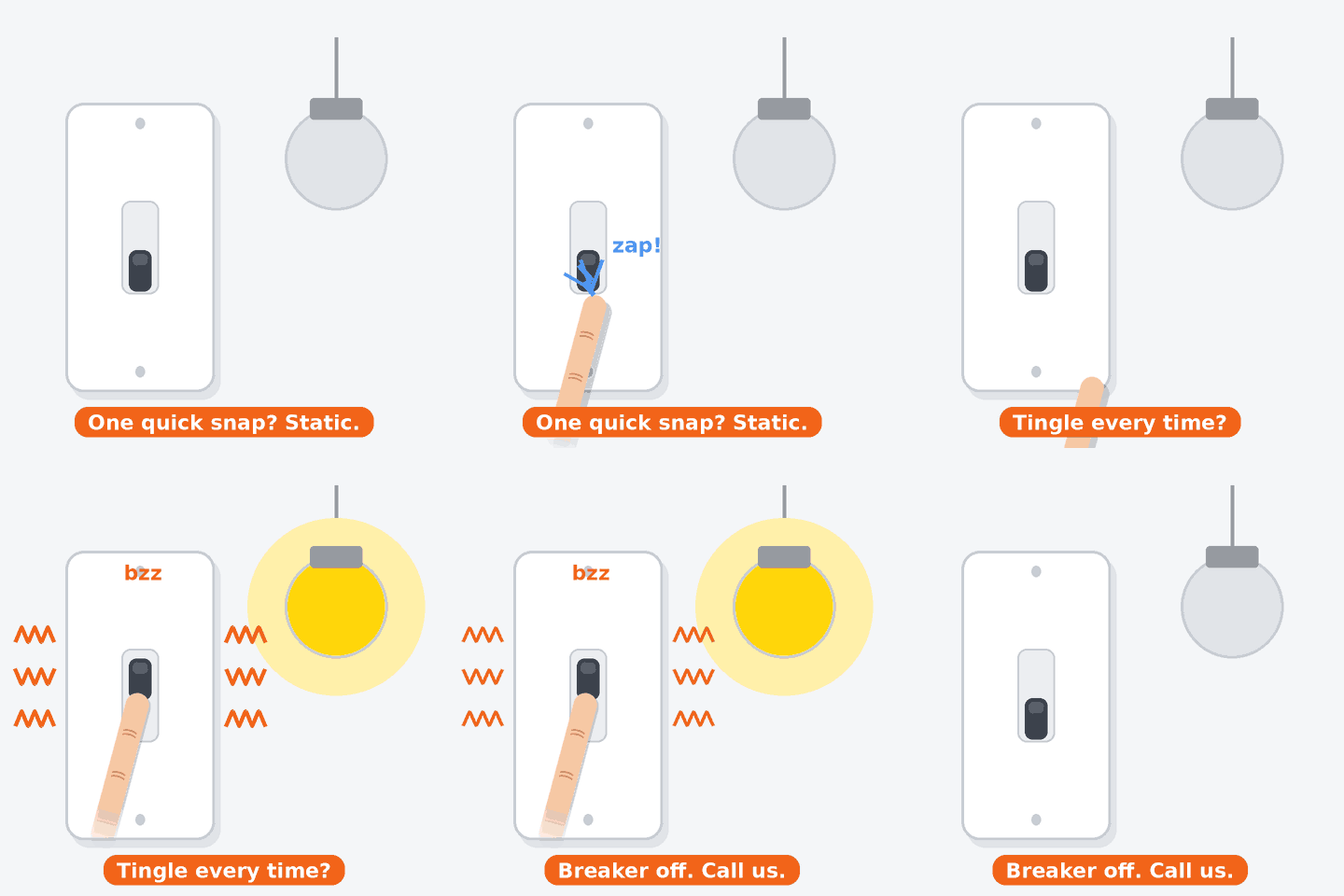
A quick snap in winter is usually static
Static builds up when you walk across carpet in socks or slippers, pull off a sweater, or get up from a couch. Researchers at the University of Kentucky note that this charge can reach thousands of volts, even though the energy is tiny. When your finger gets close to a metal plate screw or the switch itself, the charge jumps, and you feel a sharp snap, sometimes with a tiny spark.
It gets worse in winter because heated indoor air is very dry. Humid air and damp surfaces bleed the charge away; dry air lets it sit on your skin until you touch something. That's why so many people search "why does every light switch shock me" from about November to March.
Signs it's static:
One quick snap, then nothing if you touch the switch again right away
It happens at doorknobs, the car door, or other people too
It's worse after walking on carpet and mostly happens in cold, dry months
Fixes that help: run a humidifier, wear leather-soled shoes or go barefoot on carpet, and touch a key or coin to the metal plate screw before your finger does. McGill University's science office says humidity is the biggest factor in how often you get zapped.
A tingle or buzz from the same switch is not static
Static doesn't happen over and over at one spot. If a switch gives you a tingle, buzz, or steady shock each time you touch it, or you feel it while flipping the toggle, current may be reaching a part you can touch. The Electrical Safety Foundation International (ESFI) lists a mild shock or tingle from a switch as a sign a device could be failing. The CPSC goes further: any shock, even a mild tingle, may be a warning of danger.
Common causes include a cracked or broken switch or cover plate, a worn-out switch, a loose wire touching the metal box or strap, or a missing or broken ground in an older home. If the same switch also feels hot to the touch or buzzes or crackles, take it even more seriously.
What to do right now
Stop touching it. Don't test it again to "make sure."
Turn off the circuit at the breaker panel, as the CPSC advises, unless it powers something essential like medical equipment. Do this only with dry hands and dry footing.
Leave the cover plate on. Don't open the box or poke around inside.
Note the details for the electrician: which switch, whether it was every time, and whether other switches or outlets nearby act strange.
Call 911 if anyone has burns, numbness, chest pain, or a racing or uneven heartbeat after a shock, and leave the house if you see smoke or flames.
An electrician can test the switch for voltage on surfaces that should be dead, check the ground and connections in the box, and replace the device or fix the wiring. If shocks show up in kitchens or bathrooms, ask about shock protection too; our post on GFCI vs. AFCI explains the difference.
Get a shocking switch checked
A one-off winter zap needs a humidifier, not an electrician. A switch that shocks you repeatedly needs a closer look. Miron Electricians handles switch and wiring repairs across the North Shore, including Highland Park and Deerfield. For smaller fixes like this, see our small electrical jobs post, and if a switch is shocking you right now, see our emergency electrician page.
Call Miron Electricians at 224-305-7329 or request a quote.


Comments