
Why Does My Outlet Spark When I Plug Something In?
You plug something in and see a flash. Sometimes that's harmless, and sometimes it means the outlet needs attention. Here's how to tell the difference.
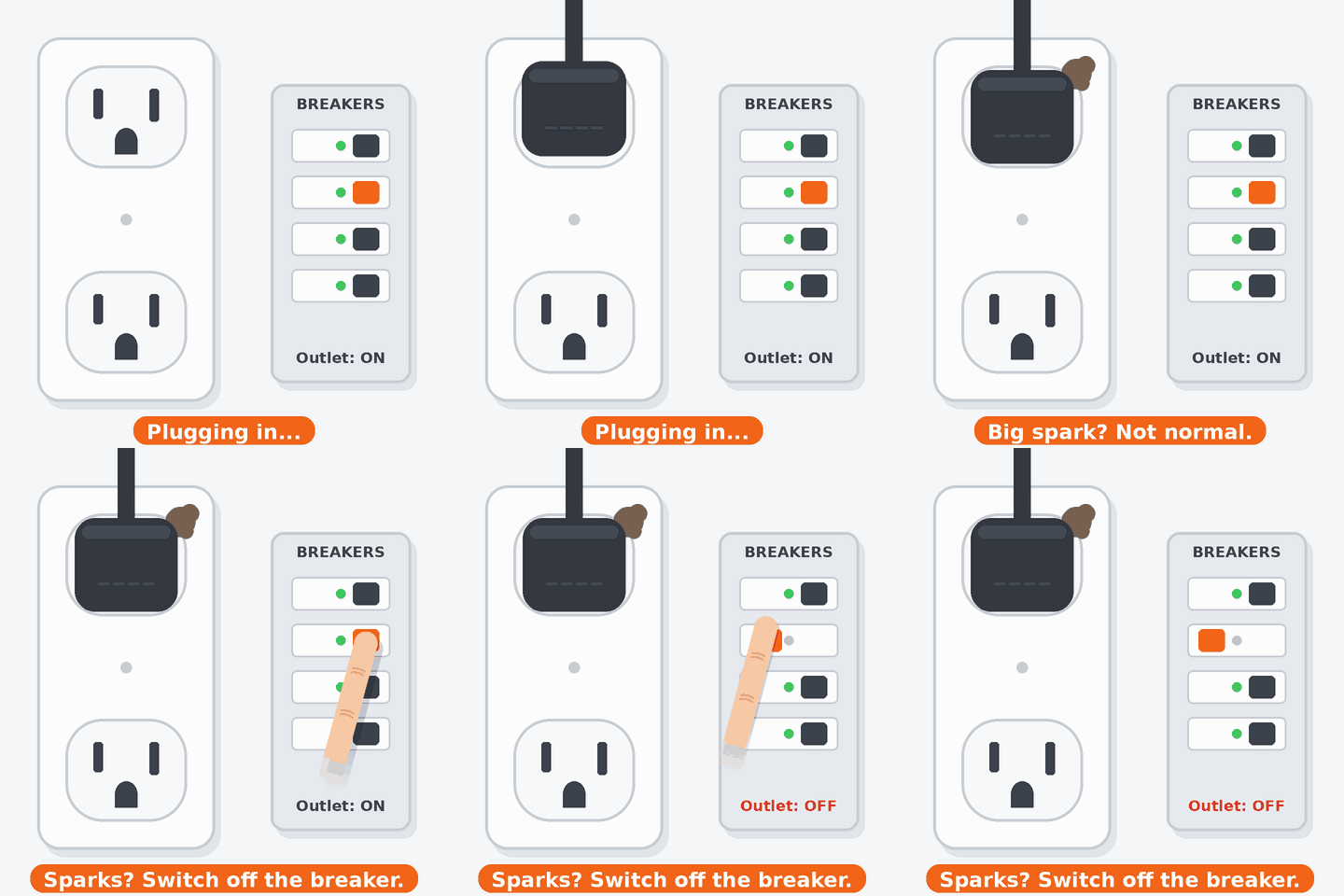
Is a small spark normal?
Often, yes. When metal prongs meet the live contacts inside a receptacle, electricity can jump the tiny gap for a split second. That makes a quick, small, bluish spark, especially if the device draws power the moment it connects. If it happens once in a while, is gone instantly, and leaves no smell, heat, or mark, it usually isn't a cause for concern.
Sparks that are not normal
Stop using the outlet if you notice any of these:
Big sparks, or sparks that look yellow or white instead of a quick blue flash
A loud pop, crackle, or sizzle
Sparks that happen repeatedly, or every time you plug in
Sparks that linger instead of vanishing instantly
Smoke or a burning or melting-plastic smell
Scorch marks or black or brown marks on the plug, prongs, or cover plate
ESFi lists arcs, sparks, sizzles, buzzing, and overheating among the warning signs of a home wiring hazard. If the outlet or cover plate also feels warm or looks discolored, see our guide to brown, burnt, or warm outlets.
Common causes of sparking at plug-in
Worn or loose receptacle contacts. Over time, the metal contacts that grip the plug blades lose tension. A loose grip means poor contact, which can arc and overheat. The CPSC's test: if plugs slip out easily or fall out under the weight of the cord, try a few other plugs. If most of them fit loosely, the receptacle probably needs replacing.
Plugging in an appliance that's already switched on. Inserting or pulling a plug while a heater, vacuum, or hair dryer is switched on means current starts or stops flowing right at the prongs, and that causes visible arcing. The CPSC recommends switching appliances off before plugging in or unplugging, and not using the plug as an on/off switch, because that damages both the plug and the receptacle.
Moisture. Water in or near an outlet can cause sparking and shorts. That's why wet areas need GFCI protection. If a GFCI outlet in one of those areas has tripped and won't come back on, see why a GFCI outlet won't reset.
Damaged plugs or cords. Bent, loose, or corroded prongs, or cracked insulation near the plug, can arc as they make contact. Never use a damaged cord, and don't bend prongs to make a loose plug fit tighter, since the CPSC warns that this usually makes overheating worse.
Loose wiring behind the outlet. Loose terminal screws or worn push-in (backstab) connections can arc inside the box, and you may see that as sparking at the face of the outlet. Arc-fault (AFCI) protection is designed to detect this kind of dangerous arcing. Learn more in GFCI vs AFCI.
What to do if your outlet sparks
Stop using it. Unplug the device only if you can do it safely, without touching anything wet, hot, or damaged.
Switch off the breaker for that outlet if you can reach the panel safely.
Don't keep testing it. Plugging things in again "to see if it happens" only adds wear and risk.
If you see smoke or flames or the burning smell gets stronger, get everyone out and call 911. Our electrical emergency guide walks through the first steps.
When to call an electrician
Call if sparking is big, loud, or repeated, if there's smoke, a burning smell, or scorch marks, if plugs fit loosely, or if the outlet stops working after a spark. Miron Electricians LLC repairs and replaces outlets and tracks down loose wiring as part of our electrical services for homes in Northbrook, Highland Park, and across the North Shore.
Call 224-305-7329 or request a quote.


Comments